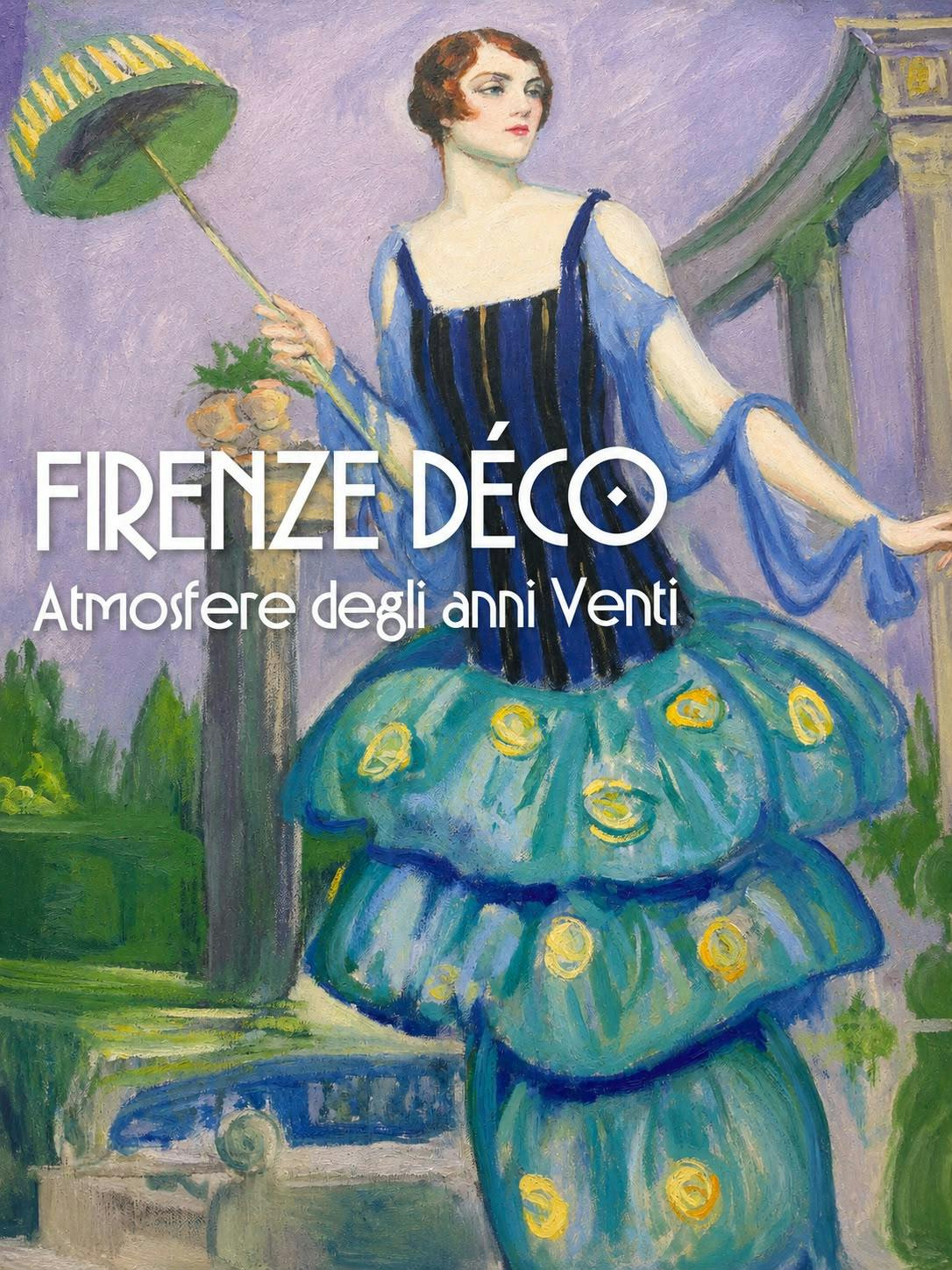
Florence Deco – 1920s Atmosphere
Florence Déco: Atmospheres of the 1920s
From 2 April to 25 August 2026, Palazzo Medici Riccardi in Florence hosts Florence Déco: Atmospheres of the 1920s, an exhibition that highlights the city's central role in the spread of Art Déco across Italy and Europe.
Promoted by the Metropolitan City of Florence and organized by Fondazione MUS.E, the exhibition—curated by Lucia Mannini—explores a decade of extraordinary creative vitality, during which Florence established itself as a sophisticated center for the applied arts, fashion, design, theatre, and the decorative arts.
The Lisio Manufactory at the Exhibition:
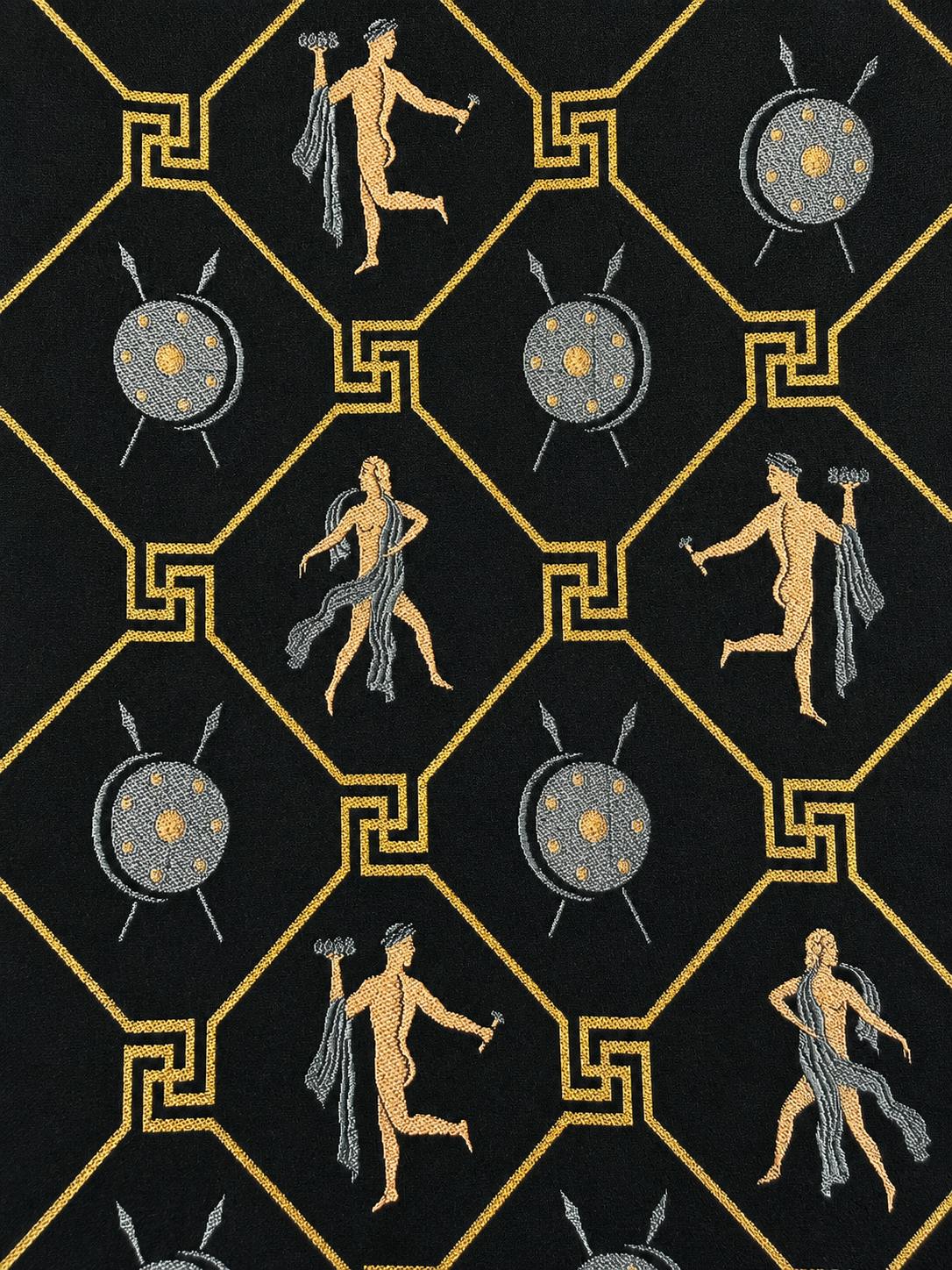
Pompeiano and the Decorative Research of Art Déco
Pompeiano and the Decorative Research of Art Déco
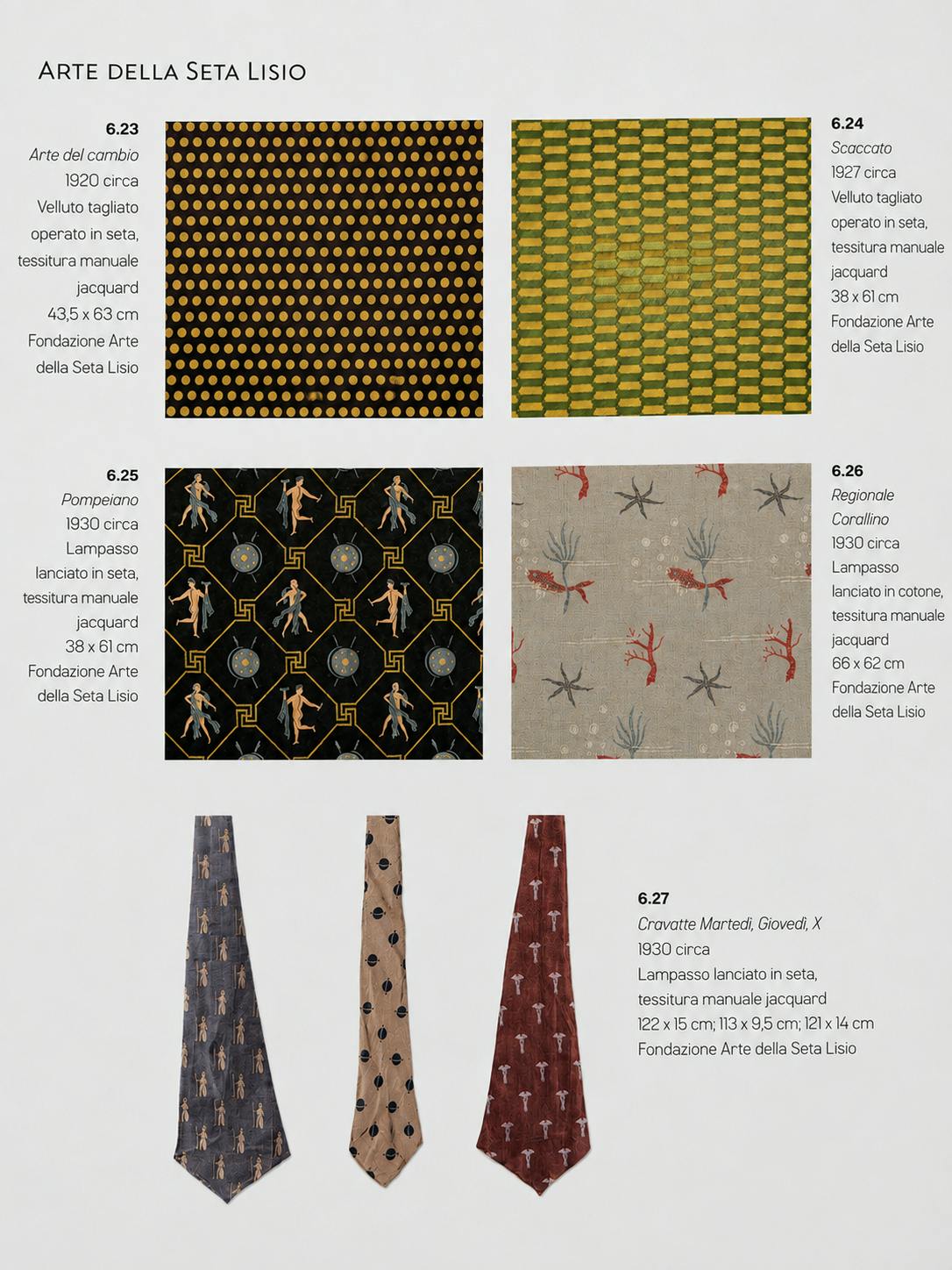
Among the most representative textiles in the exhibition is Pompeiano (1930), a silk lampas fabric.Its decorative motif evokes the world of classical antiquity and archaeology, reinterpreted through the elegant, geometric aesthetics of Art Déco.
Together with this textile, Arte del Cambio (1920) and Scaccato (1927) illustrate the Lisio Manufactory's exploration of surface design.The voided velvet creates refined contrasts between lustrous and matte areas, highlighting the interplay of light, texture, and decoration.
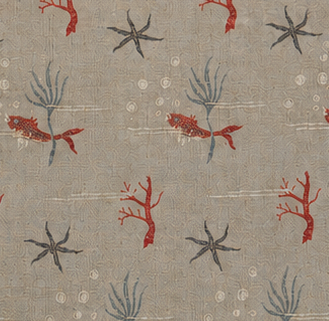
Regionale Corallino
Regionale Corallino (1930), a cotton lampas fabric, represents a more accessible production, demonstrating how the decorative techniques developed by the Lisio Manufactory could also be applied to materials other than silk.
Decorative Motifs and Accessories: The 1930 Ties
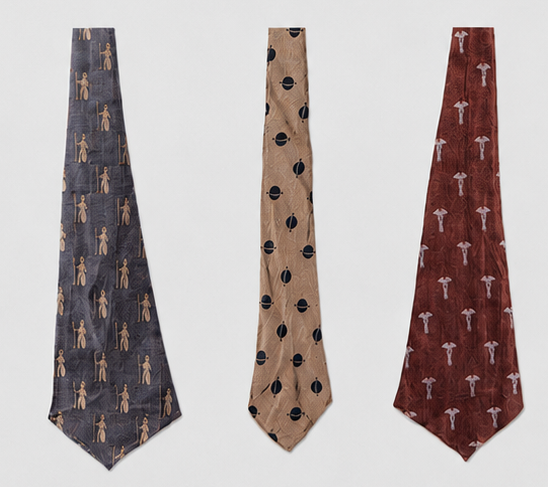
Particularly noteworthy is the group of 1930 ties, in which the fabric is applied to an everyday accessory, transforming it into an example of functional luxury. The different designs demonstrate how the decorative motif is not merely ornamental but carefully conceived in relation to the shape of the accessory and its intended use.
The Value of Textile Heritage
The Value of Textile Heritage
Conservation, Research, and Enhancement of the Fondazione Lisio Collections
From a museological perspective, the presence of measurements, technical specifications, inventory numbers, and insurance values highlights the archival and conservation role of the collaboration: each textile fragment is treated not only as an aesthetic artifact but also as a historical document.
The Fondazione Lisio thus helps promote the appreciation of textiles not merely as complements to fashion or interior design, but as genuine works of design, where creativity, craftsmanship, and cultural heritage come together.
The Art Déco Textile Production
The objects on display are textile samples mainly created through manual jacquard techniques, including silk lancé lampas and cut-pile patterned silk velvet. These complex processes allow the creation of surfaces rich in colour and material effects. The production of the 1920s and 1930s reveals the period’s interest in geometric motifs, ornamental rhythms, and refined decoration — elements that define the Art Deco language.