Plain cloth. Recognition, analysis and cataloguing 1 |ONLINE| Italian
From textile structures to historical artefacts: a learning journey combining theory, observation and practice.
How can a textile weave structure be identified? How can fibres, yarns and structures be distinguished? Which elements enable a fabric to be accurately analysed and described?
The course offers specialist training in textile identification, technical analysis and scientific cataloguing, following the cataloguing criteria of the C.I.E.T.A. – Centre International d’Étude des Textiles Anciens. Through the study of structures, materials and their characteristics, participants will acquire methodological tools to examine and accurately describe textile artefacts.
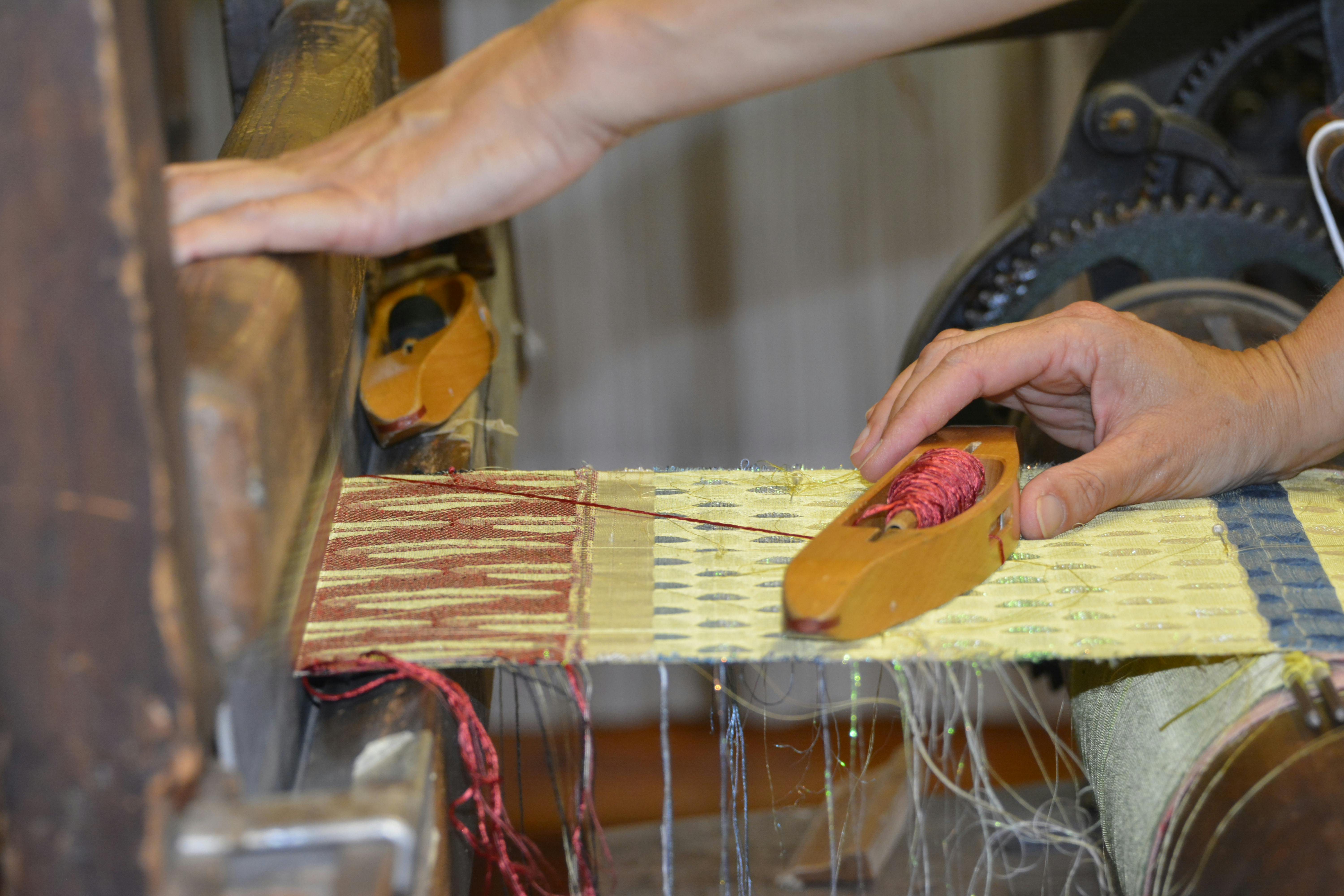
The course combines methodological learning with the direct observation of different textile materials: 100 educational samples, historical textiles from the Foundation’s archive, and contemporary fabrics produced by the Lisio Foundation using traditional techniques.
An opportunity to compare historical examples with textile production and to understand, through the materials themselves, the relationships between structure, manufacturing technique and the characteristics of each artefact.
How to enroll for Plain cloth. Recognition, analysis and cataloguing 1 |ONLINE| Italian
Course length: 40 hours
Format: online
Participation Fee: € 800,00
(Includes a teaching kit with 100 textile samples and a thread-counting magnifier)
The course will be held in Italian. Clarifications and explanations available also in English language.
COURSE TIMETABLE:
The Lisio Foundation’s textile expertise, wherever you are.
SCHEDULE: Monday to Friday, 9:00 am–1:00 pm
Instructor: Eva Basile
The online course, accessible throughout Italy and internationally, includes:
-
100 educational samples delivered directly to your home
-
60 samples illustrating textile structures: plain weaves and taffetas, plain-weave derivatives, twills, satins, gauzes, openwork fabrics, honeycomb weaves, velvets and multi-warp fabrics.
-
40 samples of textile materials and components: natural fibres, plant fibres, man-made fibres, yarns, and elements relating to spinning and twisting.
-
-
The study of historical textiles from the Foundation’s archive.
-
The examination of contemporary fabrics produced by the Lisio Foundation, using traditional techniques.
-
Certificate of attendance.
Online learning format
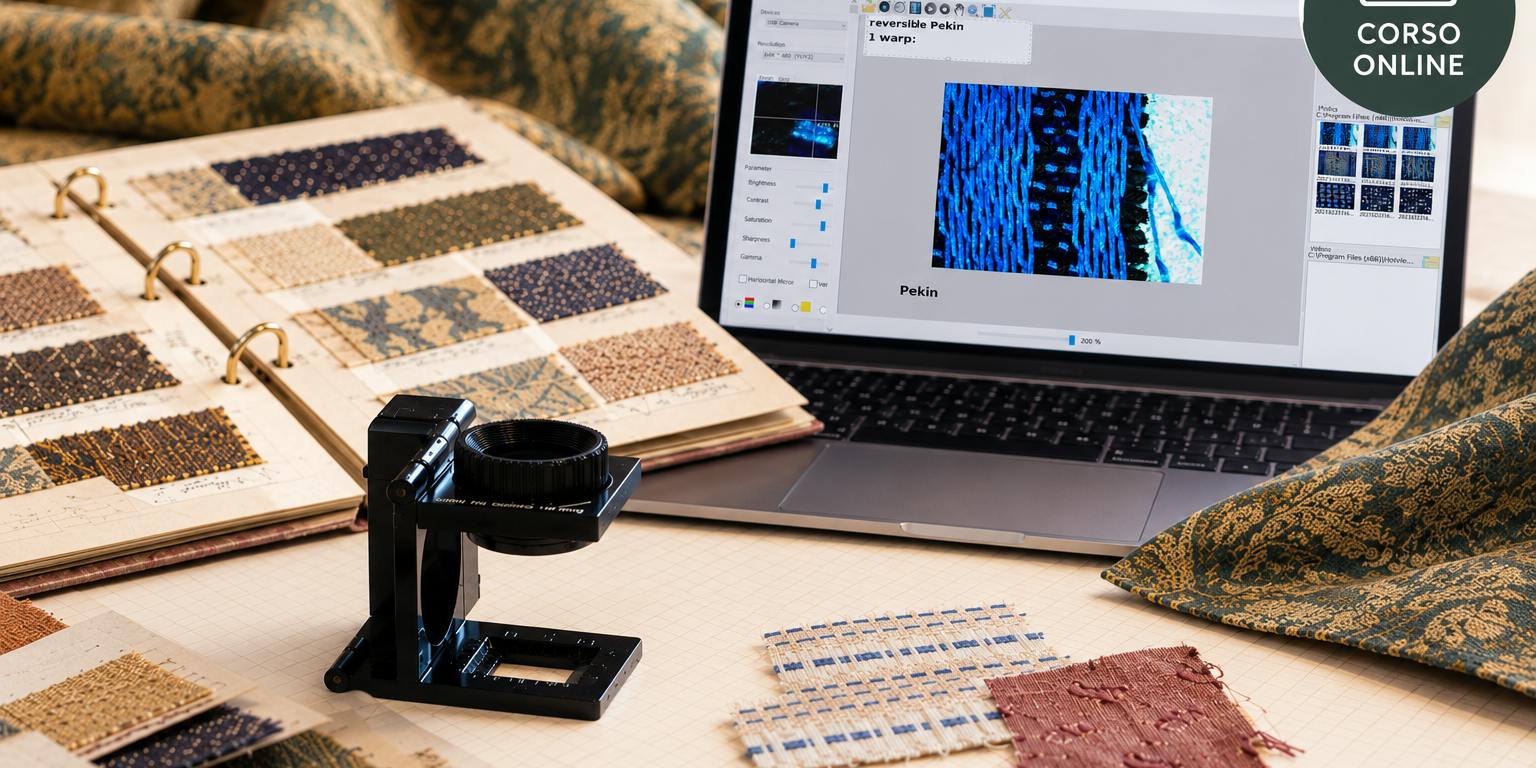
Each participant receives a teaching kit at home containing textile samples to be analysed under the instructor’s guidance. The kit includes the Lisio Foundation’s thread-counting magnifier, an essential tool for observing and identifying textile structures.
During the lessons, the instructor will present highly magnified microscope images, guiding participants through the analysis of different textile structures: from simpler weaves, such as gros and satin, to more complex constructions, such as reps alternatif and velvets.
An online learning experience combining direct observation of textile samples, technical in-depth study and specialist guidance, enabling each participant to progressively develop their textile identification and analysis skills.
Training vouchers are available, which can be requested from the Tuscany Region:

Faculties