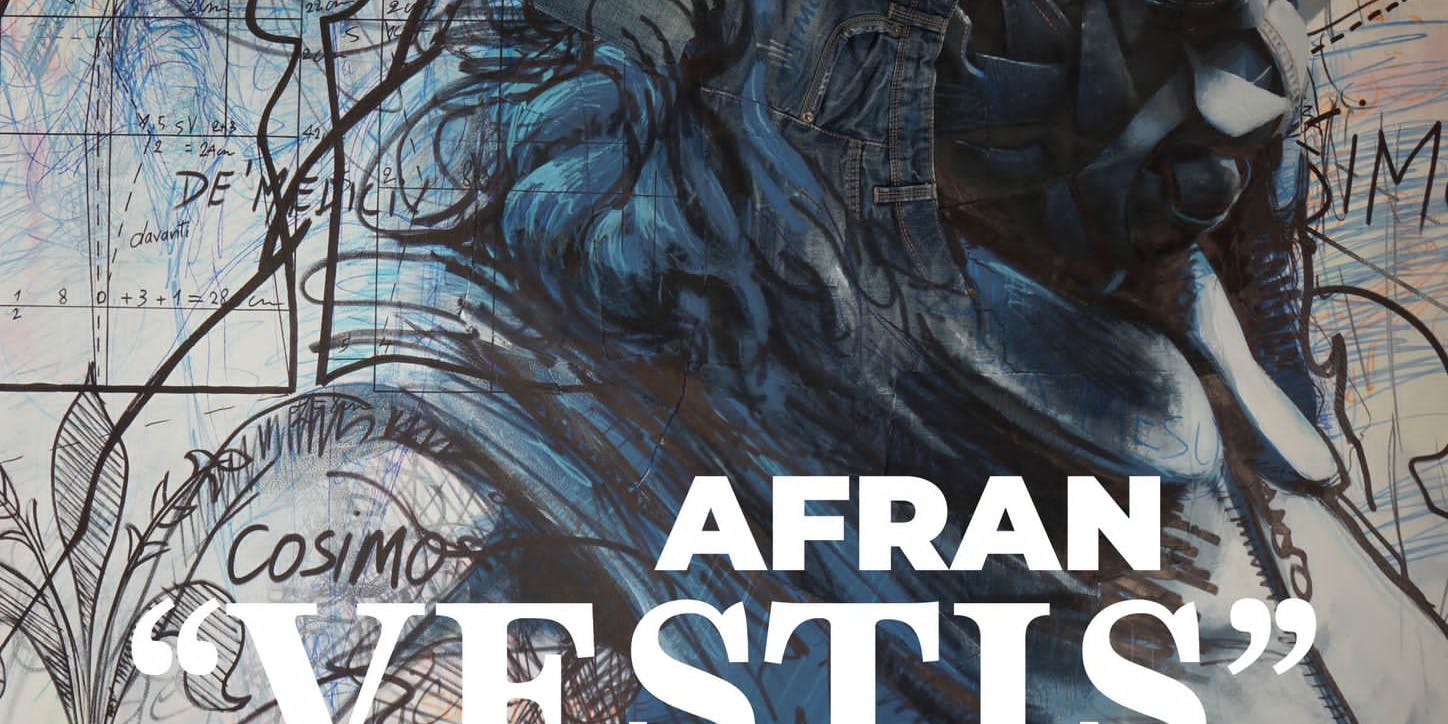
Solo Exhibition “VESTIS” by Afran
The Museo de' Medici presents the solo exhibition of Afran, a contemporary artist who works with textile materials and paints their stylistic and aesthetic characteristics, curated by Matteo Chincarini.
On the occasion of Pitti Immagine Uomo, the Florentine museum opens its doors to an exhibition event that combines artistic representation, a theme particularly cherished by the noble family, with the appreciation of textiles, a subject closely connected to the fashion event, hence the collaboration with the Fondazione Arte della Seta Lisio.
The director of the Museo de’Medici, Samuele Lastrucci, states:
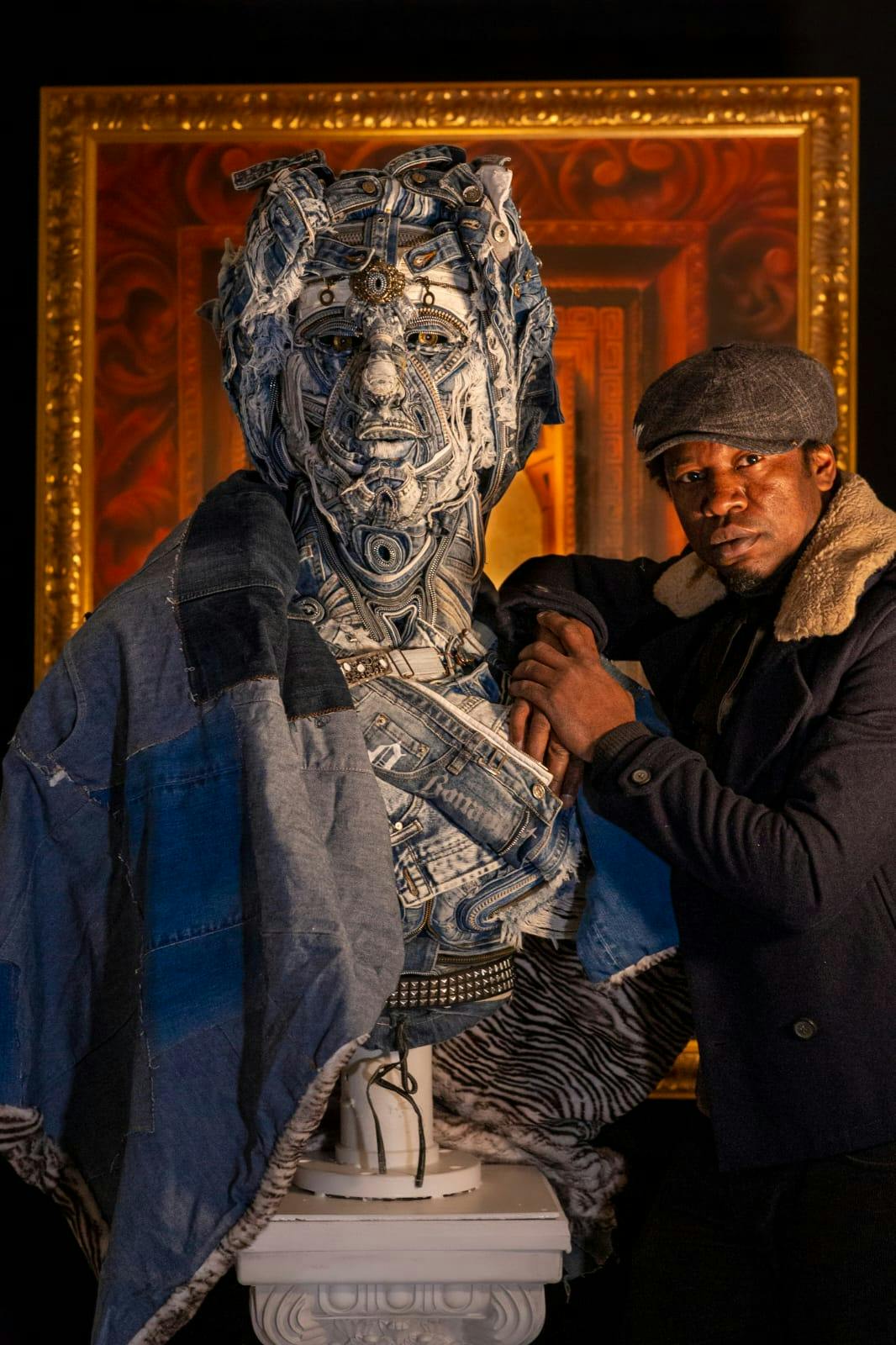
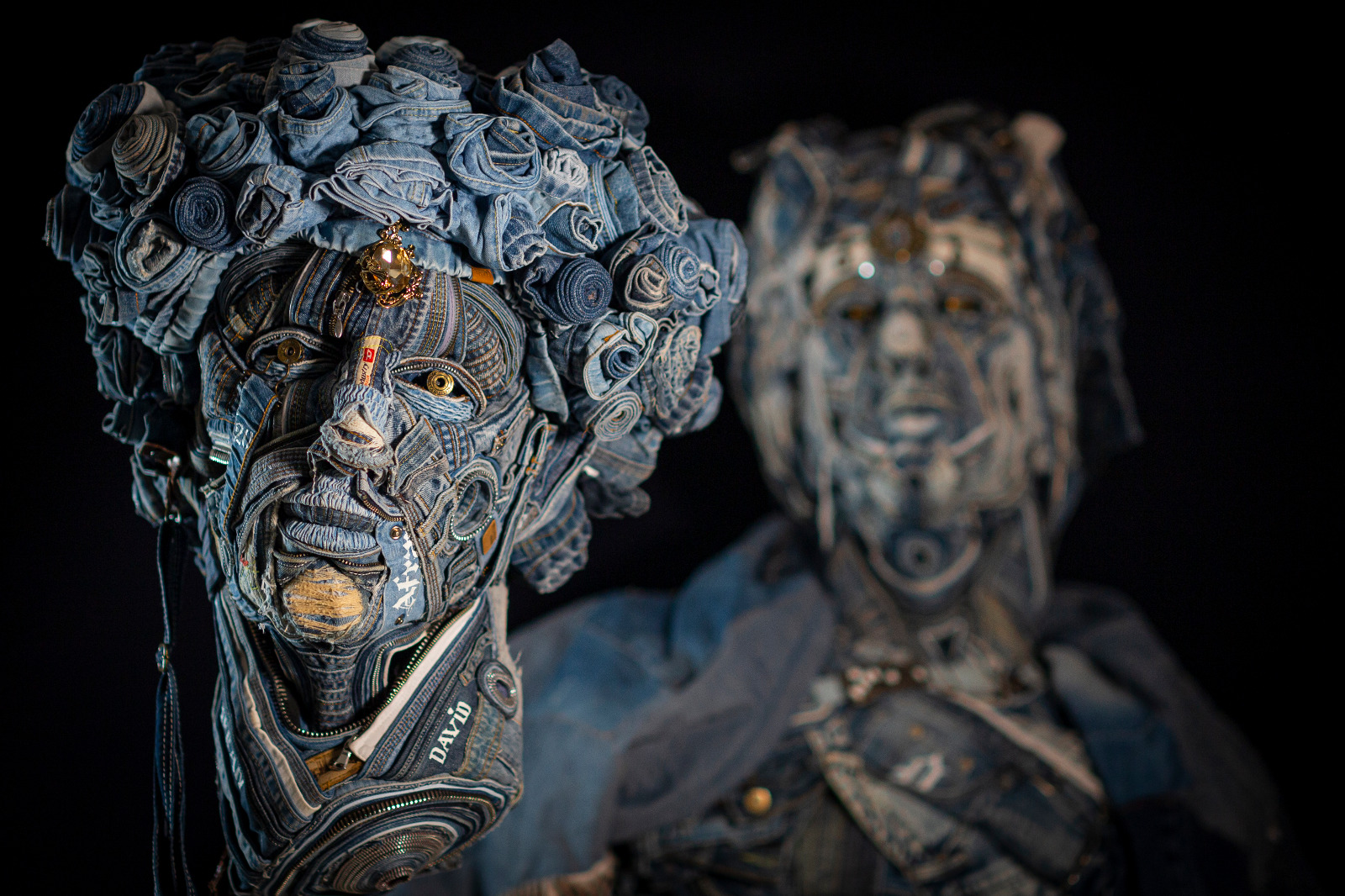
The Medici, more than anyone else, knew how to represent power through the ephemeral, art, and fashion. Afran’s works follow in the tradition of court portraiture, while overturning the celebratory paradigm that underlies this practice. The grandiose simulacra on display are in fact modelled in “democratic” denim fabric, the antithesis of the canonical materials of marble and bronze. A meeting point between fashion, art, the eternal and the corrupted, absolutism and consumerism.
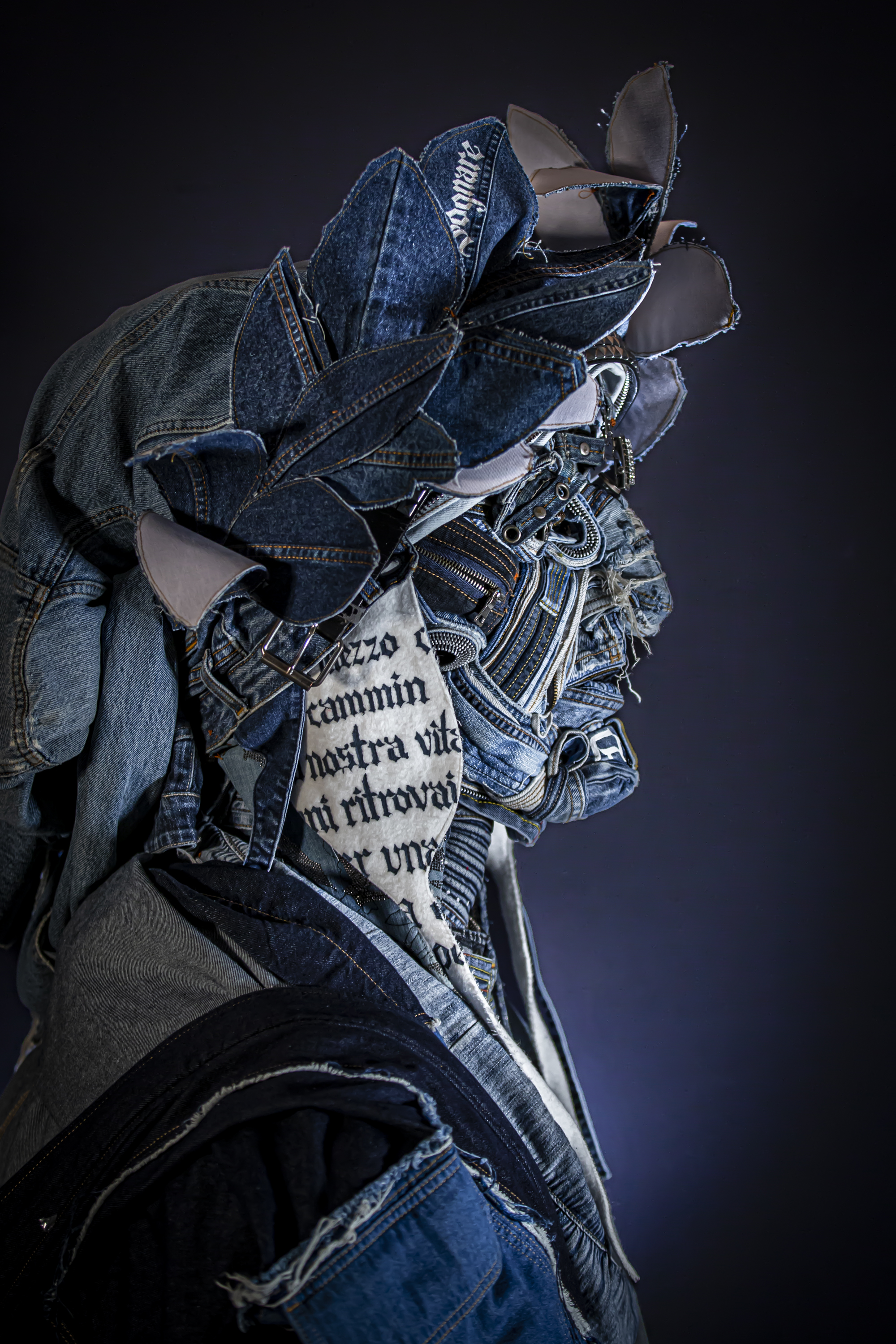
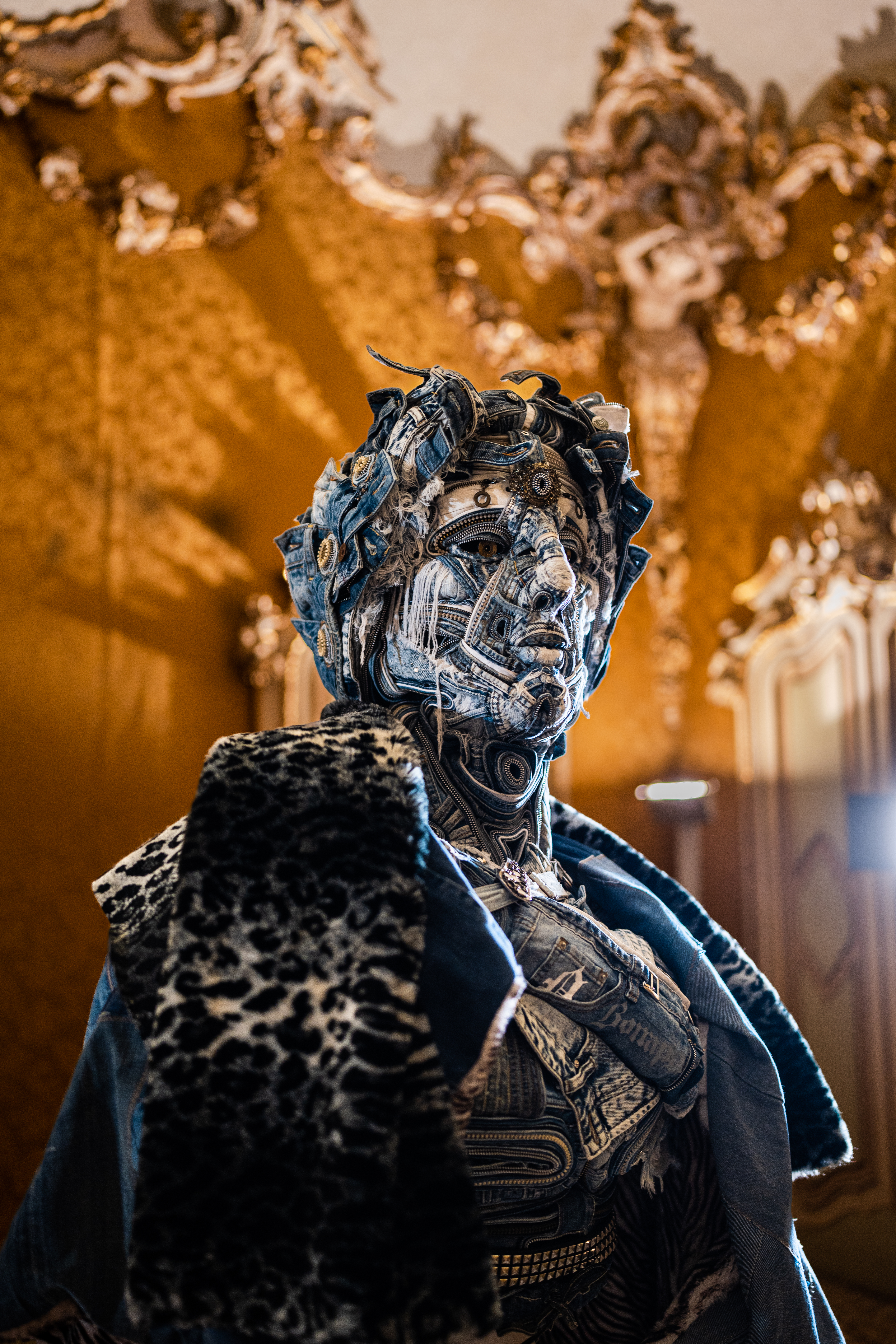
Humankind has always sought to represent itself through sculptural forms, both to immortalise an individual and to convey their importance. If, at the dawn of history, representations were symbolic, highlighting physical features in a schematic way, with the development of craftsmanship we reached the extraordinary Hellenistic period, which went beyond naturalistic representation by introducing pathos and emotion. Every statue throughout the subsequent history of art has therefore sought to emphasise the power, beauty, and social status of the person represented. Owning a bust was a great privilege, as well as a symbol of prestige, preserving and transmitting the image, identity, and history of the subject.
The artist states:
My research through textiles and sewing aims to highlight a shift: on one side, unanimous, slow, yet everlasting celebrations through marble; on the other, personalised but ephemeral self-celebrations through clothing. Clothing, which for me is a metaphor for appearance, an element that plays a particularly central role in our contemporary world. How could one not draw a parallel between the skill of weaving and sewing and the ability to create virtual content or identities? Today’s clothes are profiles, pages, accounts, statuses, posts, stories…
Today, with only a few sporadic exceptions, the desire to investigate humanity through sculptural representation has been lost. From a philosophical perspective, this phenomenon seems to suggest that contemporary human beings no longer possess the desire or inspiration to become immortal and remain indelible over time, with a prevailing sense of inadequacy.
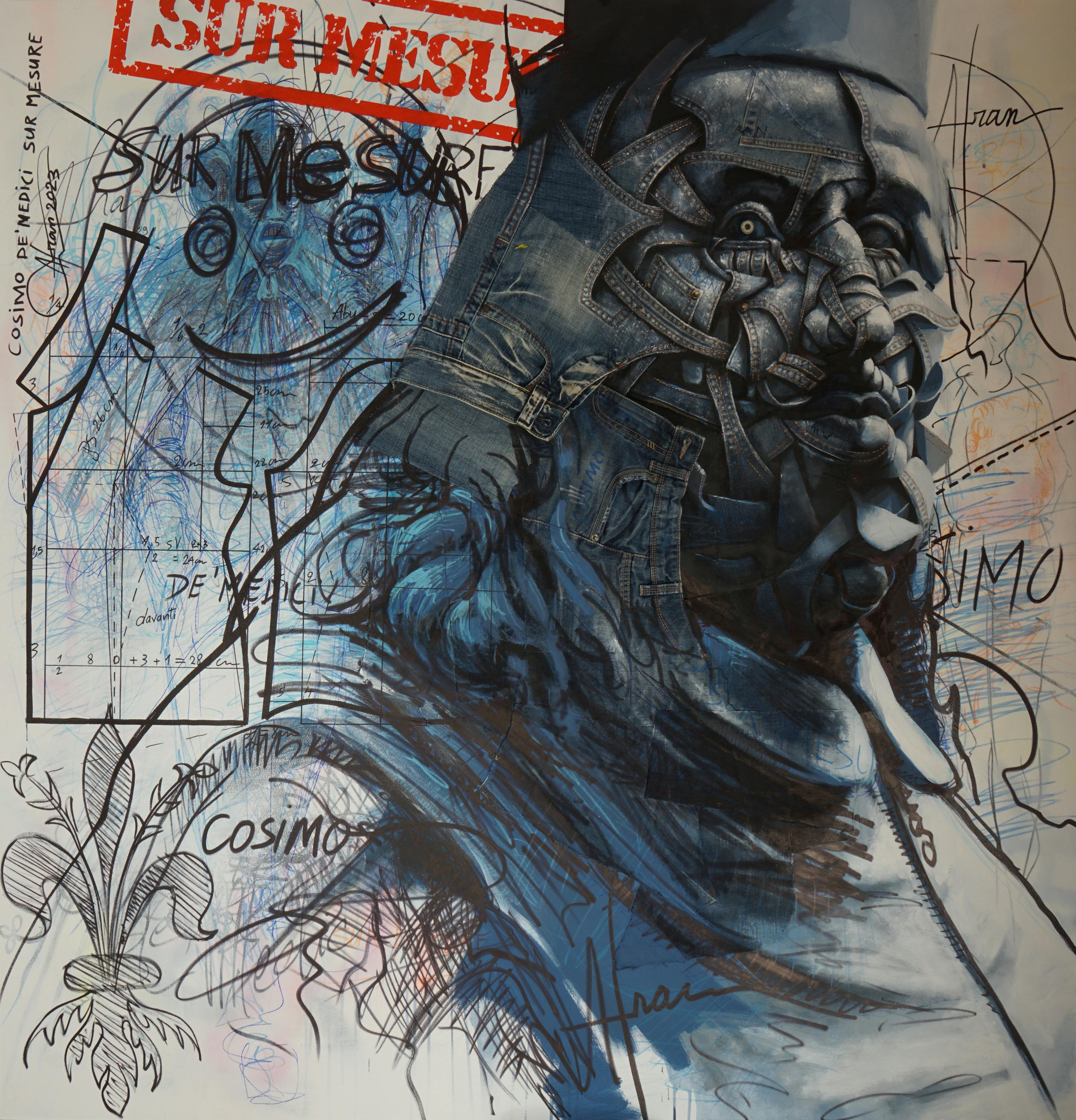
The work of the artist Afran seeks to investigate the evolution of human representation through the creation of busts and painted works made both with a product that is a symbol of contemporaneity, such as denim, and through its representation as a new artistic element. When speaking of this material, the imagination immediately turns to underground, alternative, or social themes, but jeans fully represent our era as a product of the avant-garde, a synonym for globalisation, and a symbol of democracy. For the artist, denim is not merely a fabric with which to dress or cover the artwork, but a living plastic material that takes shape, concrete and flexible, to create forms and expressions. Jeans become clay with which to model our time, transforming it into something concrete, physical, and corporeal. The ancient bust, reinterpreted by the artist and imbued with its classical beauty, enters into dialogue with the fast-paced modern world, creating a balance that is reflected precisely in the ancient faces, symbols of our identity.