Study and Research | Vestimentary analysis of the Palazzo Acaja frescoes
The project was created thanks to an agreement signed in May 2021 between Fondazione Lisio and the Italia Nostra Association – Pinerolo Section, which establishes mutual collaboration activities for scientific and cultural initiatives. We would like to thank the President of the Pinerolo Section, Maurizio Trombotto, for his kindness and collaboration.
edited by Alessio Francesco Palmieri-Marinoni
Preliminary considerations
From the analysis of the frescoes, it is possible to attribute the clothing typologies to a period ranging from 1470 to the very first years of the 16th century, although a strong influence of the taste typical of the 1450s is still clearly evident.
Through a careful analysis, it is possible to identify three main groups of clothing typologies:
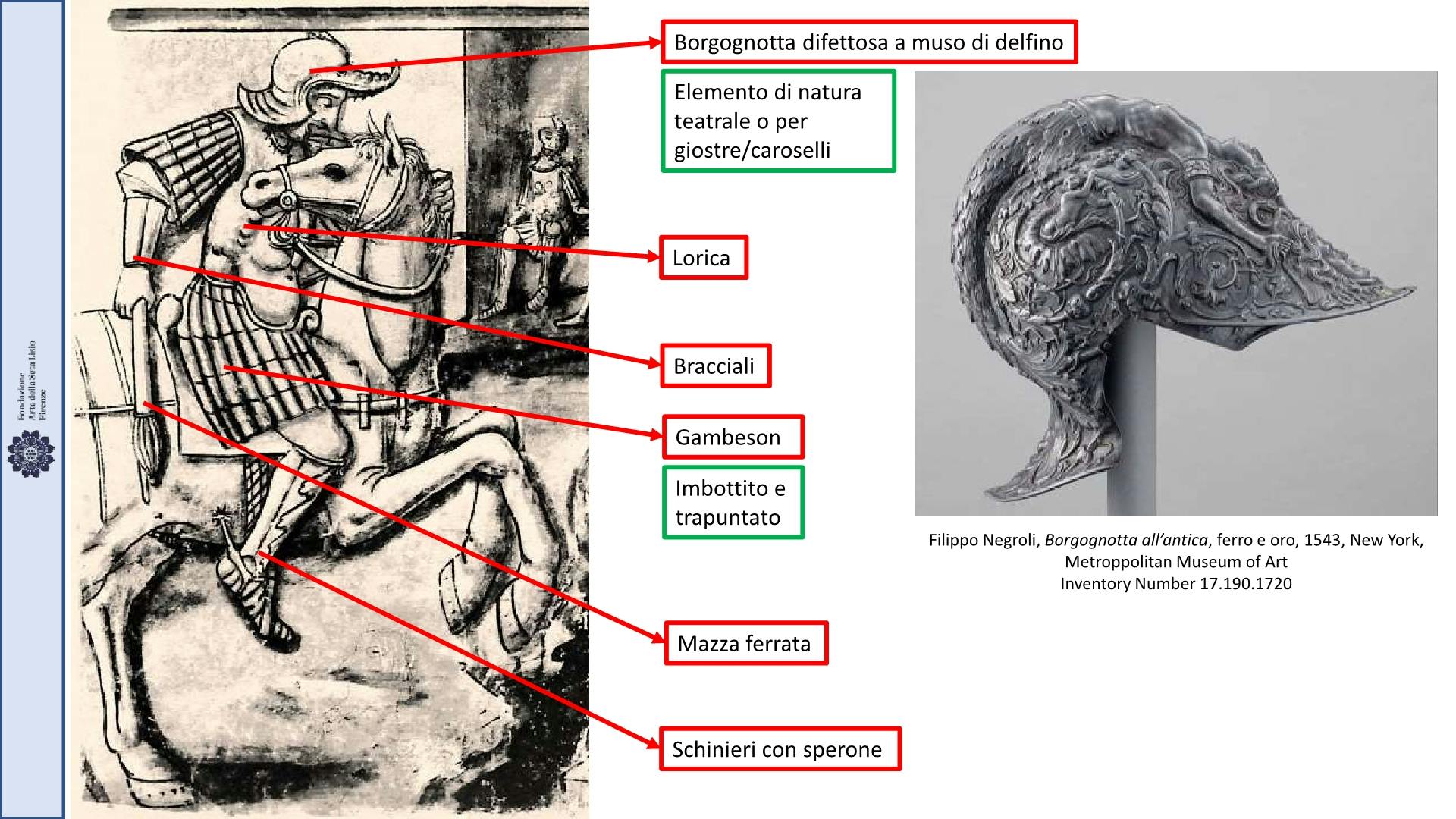
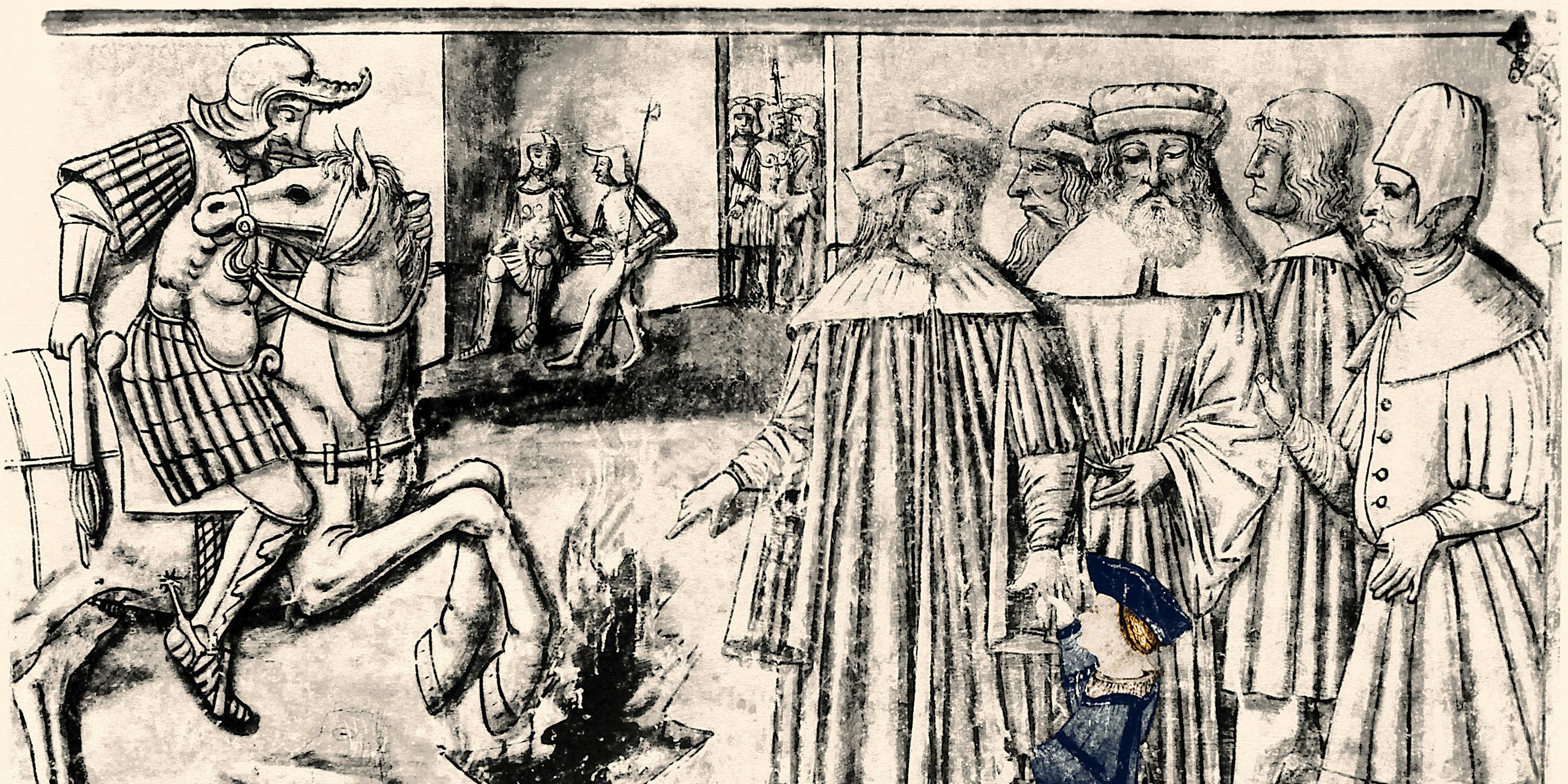
- theatrical or all’antica garments for the mythological-Roman scenes;
- garments of Savoyard-Flemish origin (particularly from the Flanders region);
- garments of Visconti origin, with numerous elements attributable to central-northern and north-eastern Italy.
Numerous similarities can be found with the garments depicted in the frescoes of Issogne Castle; this observation emerges from a close comparison with the fresco sections depicting Amadeus IX of Savoy and his entourage. The Milanese component appears to be more distinctly “Italian” in style; the artist seems almost to have intended to emphasise how the Savoy court differed from the Italian peninsula and, consequently, to underline a difference of a political and cultural nature as well.
With the exception of some linings (ermine for Amadeus IX) and the fragmentary traces of colour visible only in the figure of the child (where a blue woollen cloth and edging in plain velvet of the same colour can be identified), the complete absence of colour does not allow the textile types of the garments to be determined, except through deductions based on comparisons with similar and contemporary examples.